




Trip Facts

Trip Duration
12 Days

Mode of Trip:
Tea-House / Lodge Basis.

Grade:
Challanging

Highest Altitude
5416m

Best Time
Oct / Nov and March / April

Group Size
2+
Overview
The Annapurna Circuit Trek is a world-famous trekking route that explores the mystical peak in the Himalayan region, Mt. Annapurna [ 8,091 meters/ 26,545 feet]. This circumnavigating journey of the 10th highest peak in the world offers incredible views of the Annapurna mountain range, including other pristine peaks in the Himalayas, like Machhapuchhre, Dhaulagiri, Manaslu, Gangapurna, Tilicho, Lamjung, Tukuche, Nilgiri and other surrounding peaks.
Besides the breathtaking Himalayan panorama, the culturally enthralling trails across the Magar, Gurung, and Tamang settlements, rare flora and fauna of the Annapurna Conservation Area, spiritual hub- Muktinath, and the highest pass in the Himalayas, Thorong La Pass [5,416 meters/ 17,769 feet] are some popular highlights of this trekking adventure.
Thus, the Annapurna Circuit Trek is not just a simple Himalayan exploration; it is a journey of a lifetime where adventure meets serene tranquility, and the soul soaks in the solace of nature’s grandeur.
Annapurna Circuit Trekking route follows an anti-clockwise route behind the 50km Annapurna massif. As we start gaining elevation, lowland Hindu community gradually gives way to Tibetan group and architecture & agriculture changes accordingly. The stunning Himalayan ranges including 8,000m+ peaks – Annapurna and Dhaulagiri ranges comes full into view.
Some significant landmarks includes: the Upper Pisang – Braga route which offers great cultural insights and stunning views of Annapurna II and IV. Likewise crossing Thorong La pass at 5,416m/ 17,770 ft, offers you a real sense of achievement.
Annapurna Circuit Trek 12 days itinerary is designed to allow proper exploration and make the short trekking . The trekking route avoids a recently build road as long as possible. The total length of round Annapurna trek varies from – 160 – 230 km (100 – 145 miles), depending on where motor transportation is used and where the trek concludes. The Trek Start from Dharapani which drive 6, 7 hour by jeep or Bus from Kathmandu and Drive from Muktinath to Pokhara.
Highlight of 12 Day Annapurna Cirucit Trek
- Crossing of Thorong La Pass at 5,412m – A great sense of accomplishment!
- Astonishing view of Himalayas – Annapurna range, Dhaulagiri, Nilgiri and numerous 6,000m+ & 7,000m+ peaks
- Great cultural insight – Gurung and Magar Community (believed to be descended of Tibetan)
- Paying homage to Muktinath – a religious place known for enlightenment
- Incredible geographical experience – ranging from sub-tropical – alpine – snowy barren landscapes in short time period
Best time to Trek the 12 Day Annapurna Circuit
Autumn (September – November) and spring (March – May) are the best time to Annapurna Circuit Trek. The weather during these season is excellent with outstanding views.
If you wish to enjoy lone time with nature, then you can consider trekking Annapurna in (Dec, Jan & Feb). However, the extremely cold temperature might not be suitable for most of the travelers. Trekking in Monsoon is full of risks – landslide & flood – but it can be boon for a keen botanist.
Difficulty of Annapurna Circuit Trek 12 Day
Annapurna Circuit Trek is moderate Difficulty hiking trails, but it’s not easy to get it done. The trek is quite intimidating, with varied tropical and alpine terrains. It stretches from the base at Chame to Thorong La, gaining excessive elevation and affecting the health of trekkers.
The sudden exposure to high elevation often leads trekkers to altitude sickness. They mostly experience mild symptoms like dizziness, insomnia, and loss of appetite. This mostly affects beginners who are not used to trekking high altitudes.
The rising elevation and deadly drops can be strenuous and physically demanding for hikers. Its long and winding trails drain much of the energy during the trek. Therefore, you’ll have to build stamina and improve your endurance to finish the walk.
With an average trekking distance of 10 to 12km, hiking Annapurna Circuit isn’t easy. You’ll have to defy steep hills, mountainous terrains, and rugged cliffs to reach the acme, which is quite exhausting. The impact can worsen if you are stuck on the trail or encounter bad weather.
Therefore, picking the right season is important for a hassle-free trek. In case you didn’t know, winter in Annapurna Circuit trek can be brutal with freezing temperatures. You may have to brave windstorms, blizzards, and snowfall, which sometimes makes trekking impossible.
12 Days Annapurna Circuit Trek Cost
The 12 days Annapurna Circuit trek cost for 2024 and 25 start from USD 900 to USD 1600 Per per Person , The price is matter for group size , traveling seasons and number of people. However Adventure Great Himalaya is offering this wonderful 12-day package of Annapurna Circuit trek at the economical price of only USD 990 per person minimum 2 people private group
The package will cover all your accommodations on the trekking trails and during your stay in Pokhara and Kathmandu. However, you will be provided with breakfast only during your stay in Pokhara and Kathmandu. For lunch and dinner during these stays, you have to manage it on your own. Rest assured, you will be provided with 3-time meals (Breakfast, Lunch, and Dinner) during the trek. Moreover, all your permits, along with service fees and transportation after your arrival in Kathmandu, will be handled by us. The package will include the cost of hiring guides and porters, too, but tipping them is exclusive of the cost.
Despite most of the expenses being included in the package, you will have to handle your travel insurance and flight-related expenses in and out of Nepal on your own. Likewise, the meals do not include bars and bottled drinks along with additional amenities of the hot shower, recharging, and WiFi.
Meals during 12 Days Annapurna Circuit Trek
The meals during 12 Days Annapurna Circuit Trek are just as comforting as the place. While you can find a good variety of meal options during the trek, do not expect to find all varieties of Western food in all teahouses and the menu can vary with place.
Breakfast menu options include heavy food options including porridge, fruits, eggs, toast, muesli, tea, coffee, and others of sort. The lunch and dinner menu consists of mainly Nepali cuisine ‘Dal Bhat’, noodles, and dumplings. The infamous Nepali cuisine ‘Dal Bhat’ is basically rice with lentils and a variety of vegetables and meat. This is considered the ‘comfort food’ in Nepal, which gives you nutrition in many ways and fuels your trek. Further, you can find shops along the way for some light local snacks for quick energy.
It is important to know that the food options might be more limited in more remote areas during the trek. Moreover, please make sure to communicate any dietary restrictions you might have with our guides. Overall, the meals during the Annapurna Circuit Trek are designed and served with the necessary nutrition to make you more energized during this journey in the Himalayas.
Accommodations on the 12 Day Annapurna Circuit Trekking
Accommodations during the 12-day Annapurna Circuit Trek mainly feature teahouses and lodges operated by locals in the Annapurna region. While in Kathmandu, our stay will be at a 3-star hotel in Kathmandu with all the needed facilities. As we make our way towards the natural wilderness in the Annapurna Circuit trekking journey, the accommodation options tend to decrease with remoteness.
Mostly the accommodations feature teahouses and lodges, whereby we can arrange rooms with attached bathrooms and hot showers in lower altitudes. But as we head towards higher elevations, some teahouses might not provide such service. All in all, the thing to look for during a trek in such remote areas is a comfortable place to sleep and rest, with basic amenities.
The accommodations stop during the Annapurna Circuit Trek are designed to provide comfort and a safe space for trekkers to rest and reset for the next day. In addition to that, the teahouses and lodges in major towns in the Annapurna region serve the most calming views of the Himalayas.
Mood of Transport and Road Condition
As you will be covering the distance to Dharapani from Kathmandu with an overland drive, we will provide you with a comfortable private jeep. From Dharapani, you will be stepping on trails until you reach Muktinath on the ninth day of the Annapurna Circuit trek. After arriving in Muktinath, you will take a jeep drive to Pokhara. If you want, you can trek to Jomson and opt for the 25-minute flight from Jomsom to Pokhara. But those flights usually get canceled due to various reasons, so it is better to take a Jeep drive.
While retracing your path, you will take a drive on a comfortable tourist bus from Pokhara to arrive at the busy metropolis, Kathmandu. While traveling from Kathmandu to Dharapani and back to Pokhara via Muktinath, you can opt for a cheap option of local jeep sharing. However, we do not suggest this method as it can bring discomfort and issues with limited space during the journey.
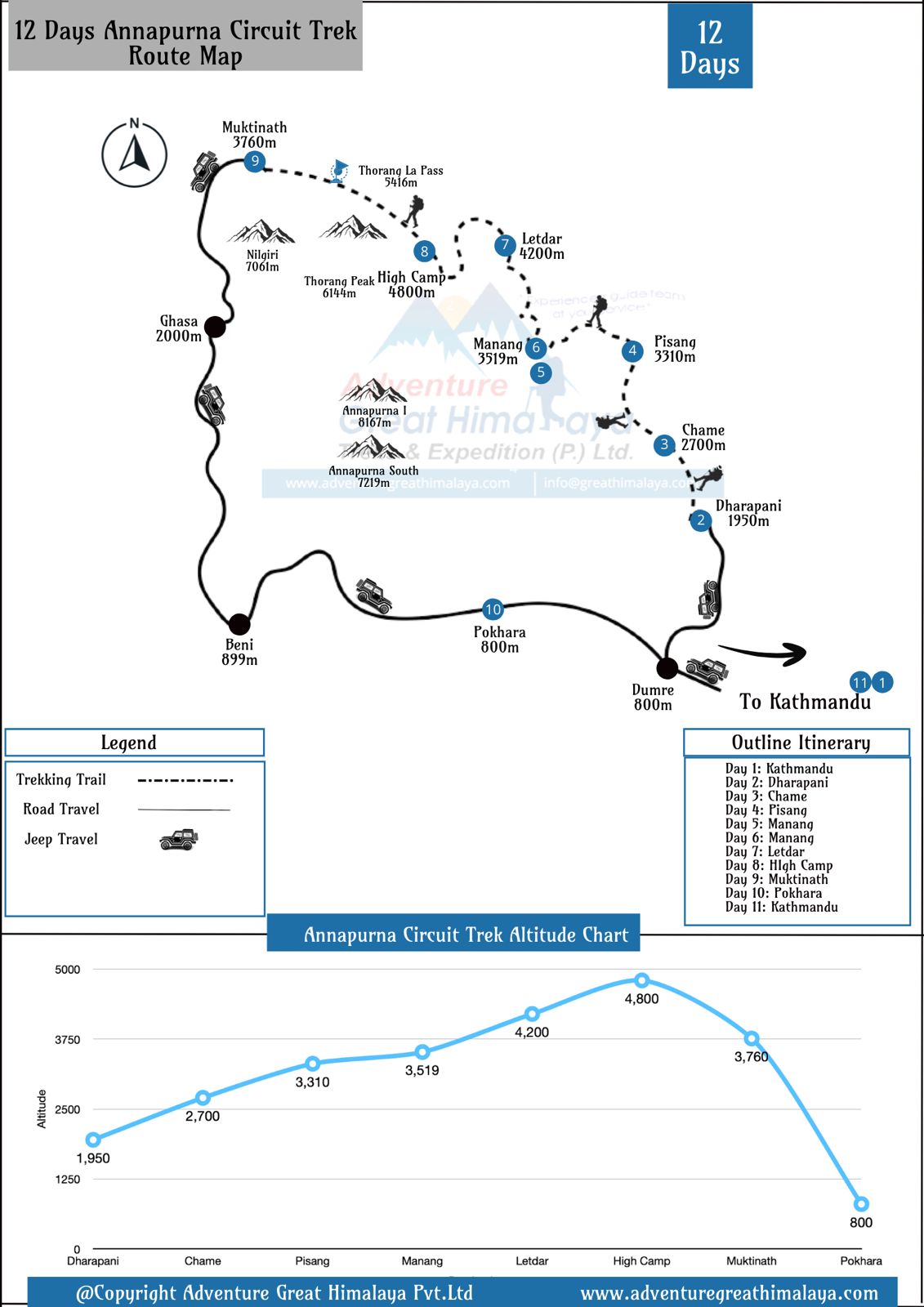
Annapurna Circuit Trek 12 Days Outline itinerary
Day 1 – Arrival in Kathmandu, Nepal, Welcome for Annapurna Trek
Day 2 – Breakfast and Drive to Dharapani by Private Jeep , 7 Hour
Day 3- Trek to Chame- 6 hour
Day 4- Trekking To Pisang – 06 hrs.
Day 5- Trekking To Manang via Upper Pisang route – 07 hrs.
Day 6- free and Acclimation day at Manang for local hikes and acclimatization.
Day 7- Trekking to Ledar – 05 hours.
Day 8 – Trek to Thorang High Camp – 05 hrs.
Day 9- Trekking to Muktinath via Thorang-La 5,416 m – 08 hrs.
Day 10- Breakfast and Take private jeep drive to Pokhara -8 hour
Day 11 – Drive to Kathmandu by Tourist Bus -7 hour
Day 12 – Departure from Nepal or Extend your holidays
Details Itinerary
Day
1
Arrival in Kathmandu (1,396 m.)
Upon your arrival, proceed to the outside of airport terminal, our representative will wait for you to take you to the hotel which taking around 20 minutes. Please look for your name which will be shown on signage. Overnight at hotel in Kathmandu.
Hotel :- 3 Star
Meals : Dinner
Day
2
Drive to Dharapani by 4*4 wheel Jeep . 1,300 m, 7 hour drive
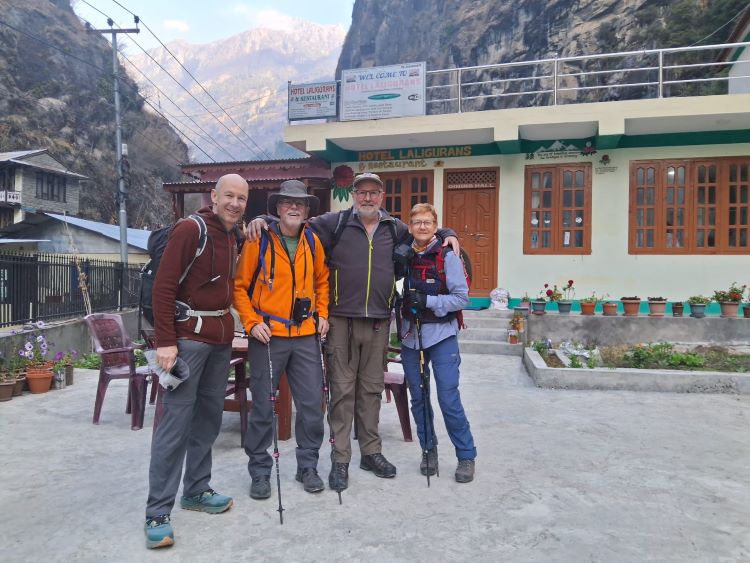
The day begins with the drive to Dharpani by jeep from Kathmandu via Prithvi Highway. We go through Dumre -Besisahar – Bhulbhule – Bahundanda – Tal– Dharapani . Passing across pretty waterfalls, small streams that join the Marsayangdi River, suspension bridges, barley and potato fields, numerous overnight camps with tea house occupies the entire way towards Dharapani Overnight stay at Dharapni. Transportation :- 4*4 Wheel Jeep
Accommodation : Twin Sharing Lodge
Meals :- Breakfast, Lunch, Dinner
Day
3
Trek to Chame- 2,710m, 6 hour
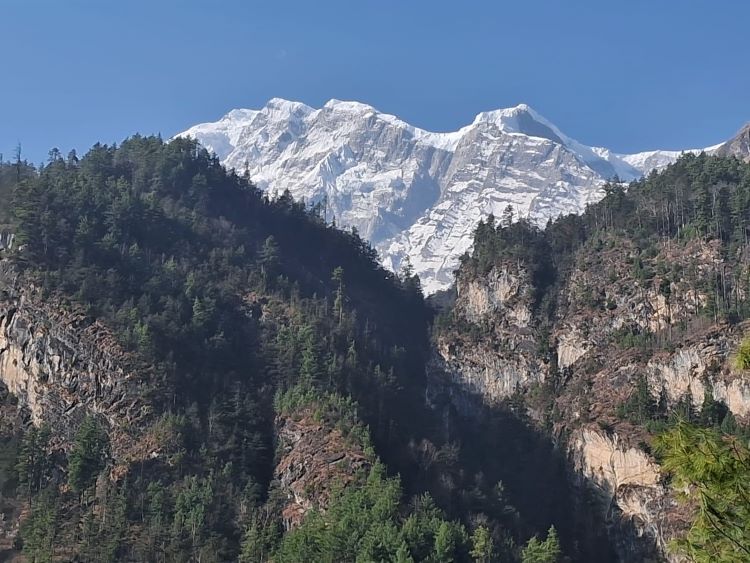
Today Our trekking destination is Chame, which is Headquarters of the Manang Distric, we will walk through of forest with amazing Views of Massif Annapurna 11, Annapurna IV and Lamjung Himala. On this day we will cross local village and some small hot spring as well. Over night Lodge in Chame.
Trek Duration : – 6 Hour
Accommodation : Twin Sharing Lodge
Meals :- Breakfast, Lunch, Dinner
Day
4
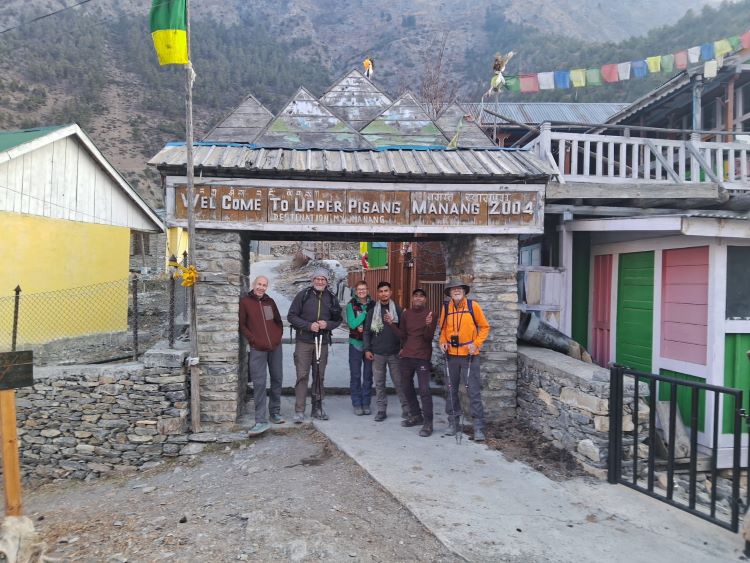
Trek To Upper Pisang 3, 230 m – 06 hrs.
After breakfast, we start our trek negotiating a steep and narrow path through the lush forest. Eventually we reach a dramatic curved rock face soaring 1,500m above from the river. This is probably the steepest section of Marshyangdi valley. As we cross the rock, the valley opens up with incredible views. We continue walking until we reach Lower Pisang.
Trek Duration : – 6 Hour
Accommodation : Twin Sharing Lodge
Meals :- Breakfast, Lunch, Dinner
Day
5
Trek To Manang, 3,450 m – 05 hrs.
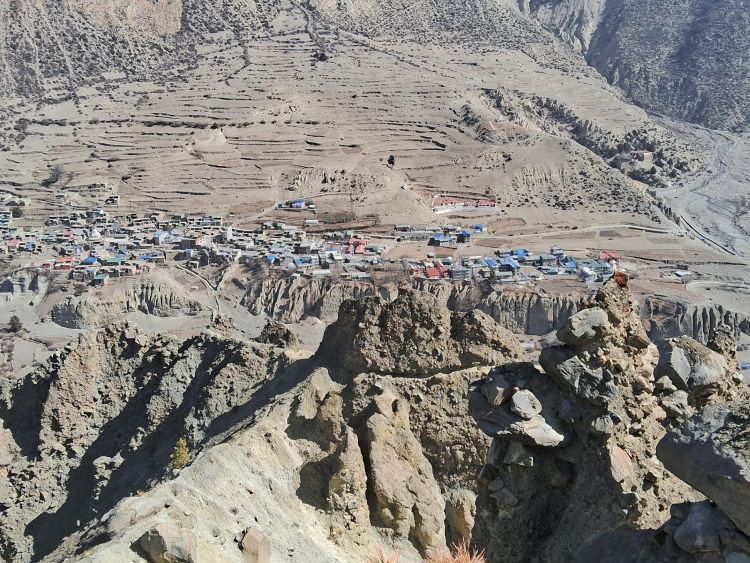
Today we have trekking options to Manang but we follow the Upper Pisang route via Geru. This trekking route ensures the majestic views with stunning landscapes and mountains including Annapurna and Pisang. Gradually we start noticing a change in landscapes and vegetation. The climate becomes rough and dry as we reach Manang. On the way, we visit Bagre Monastery – the largest monastery in Manang district.
Trek Duration : – 5 Hour
Accommodation : Twin Sharing Lodge
Meals :- Breakfast, Lunch, Dinner
Day
6
Rest day at Manang for local hikes and acclimatization.
An important rest day for acclimatization before reaching high altitude and up to Thorang –la, here with short hike exploring Manang village beneath towering Annapurna and Gangapurna peaks, a nice short hike up for views of Gangapurna Glacier and the Manang glacial Lake.
Trek Duration : – Free Day
Accommodation : Twin Sharing Lodge
Meals :- Breakfast, Lunch, Dinner
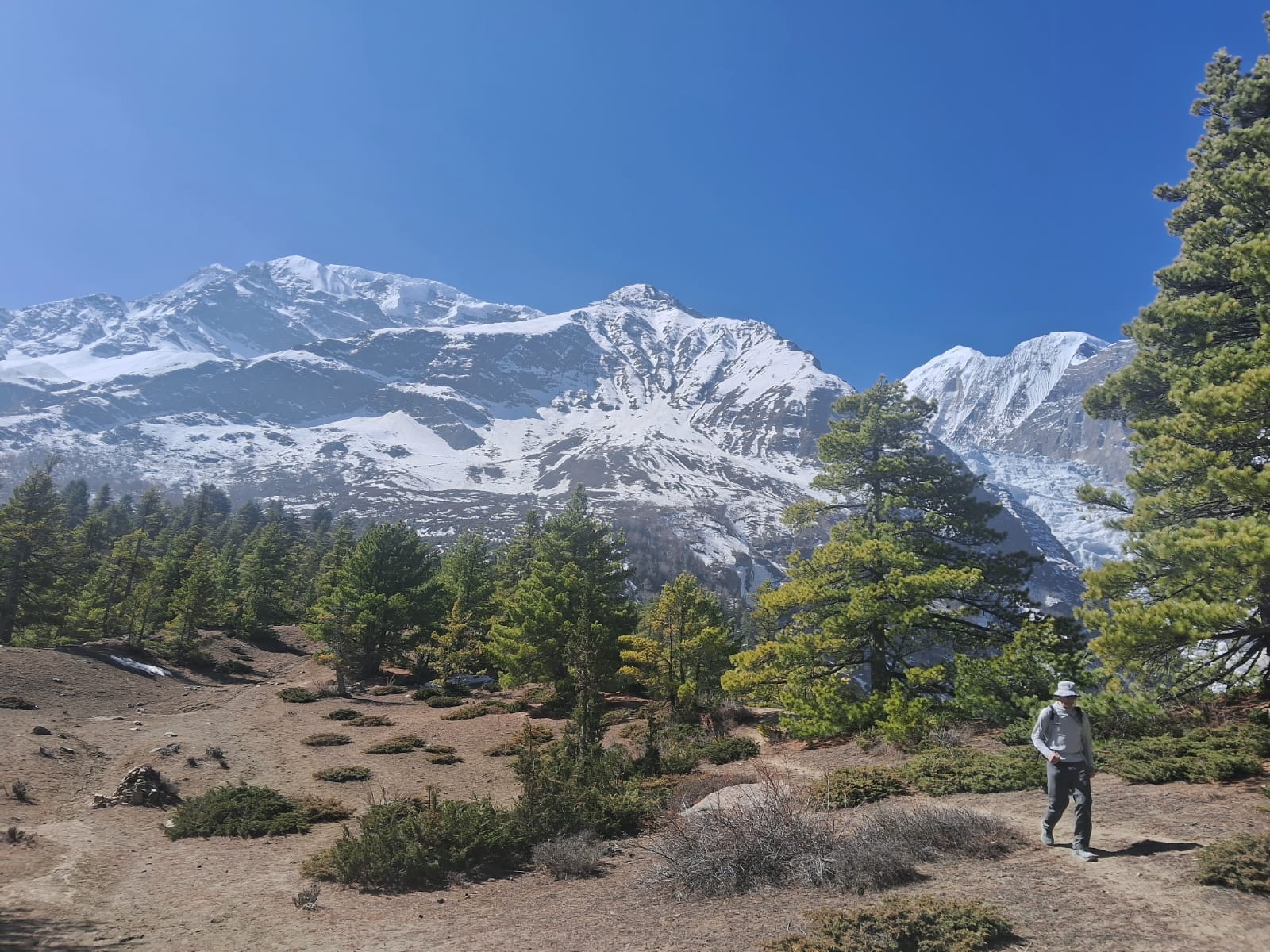
Day
7
Trek to Ledar 4,230 m – 05 hours.
After a good rest at Manang, walk towards Yak Kharka, an interesting high altitude walk with views of mountains, crossing small streams to reach at Yak Kharka, a small settlement with incredible views of Gangapurna, Annapurna III and Chulu Peaks.
Trek Duration : – 5 Hour
Accommodation : Twin Sharing Lodge
Meals :- Breakfast, Lunch, Dinner
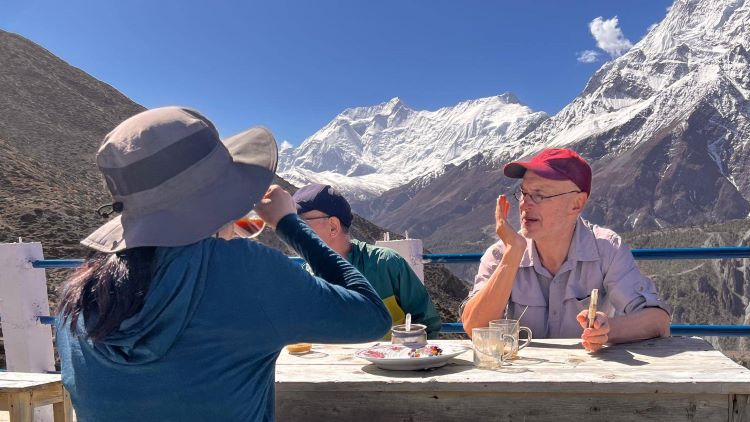
Day
8
Trek to Thorang High Camp 4,600 m – 05 hrs.
Morning walk leads closer to Thorang-la as the walk progress crossing a bridge and then a climb along the Jarjung river, then leading at Thorung Phedi for short rest and then climb the last hour uphill to Thorang High Camp for overnight stop.
Trek Duration : – 5 Hour
Accommodation : Twin Sharing Lodge
Meals :- Breakfast, Lunch, Dinner
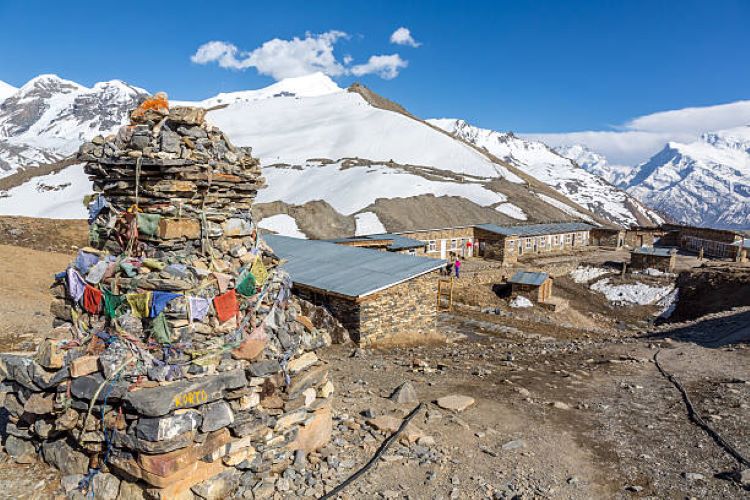
Day
9
Cross Thorang-La 5,416 m and to Muktinath 3,800 m – 07 hrs.
Start the early morning walk on this Big Day! A thrill and highlight of this great adventure, after breakfast a long climb up to Thorang-la with steep haul to reach at 5,416 m / 17,700 ft on top of Thorang-la festooned with Buddhist prayer flags.Highest point of the adventure certainly requires high spirit and strong mind to reach this high point.
The top of Thorong La offers superb vista landscapes and snowcapped peaks such Mount Annapurna, Dhaulagiri, Manaslu, Pisang peak, Thorong peak and many more , From here a long descend to Muktinath at 3,800 m.Muktinath a holy place for both Hindu and Buddhist the word Muktinath literally means ‘the place for Nirvana or Liberation’.
Trek Duration : – 7 Hour
Accommodation : Twin Sharing Lodge
Meals :- Breakfast, Lunch, Dinner
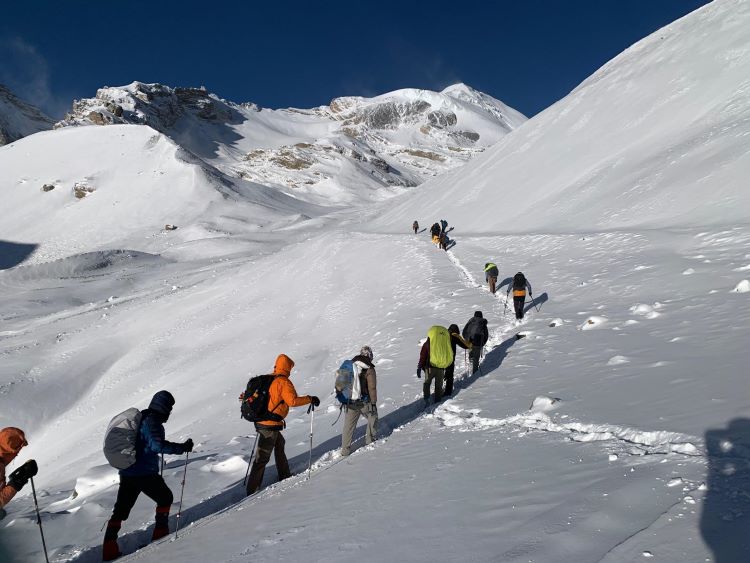
Day
10
Drive Back to Pokhara by Jeep -8 hour
Today we will drive back to Pokhara by Private jeep, There is flight from Jomsom to pokhara but offently cancel, so that we suggest you take jeep.
Transportation : – Jeep
Accommodation : Twin Sharing
3 Star Hotel Meals :- Breakfast
Day
11
Drive Back to Kathmandu by Tourist Bus
This morning we will catch tourist bus at 7 am and travel back to Kathmandu. Check in Hotel, farewell dinner hosted by Adventure Great Himalaya to celebrate the successful completion of the trip.
Drive : – 6, 7 hour
Accommodation : Twin Sharing 3 Star Hotel
Meals :- Breakfast
Note – The Flight are available from Pokhara to Kathmandu with Addition cost USD 105 Per person
Day
12
Departure from Nepal
Your adventure holiday in Nepal comes to an end today. An airport representative from Adventure. Great Himalaya will transfer you to the Tribhuvan International Airport for your final departure.
Meals :- Breakfast
Cost Include/Exclude
What’s include
- Airport/ Hotel/ Airport Transportation
- Two Nights Hotel in Kathmandu including Breakfast.
- 3 Meals a day during the trek (Breakfast, Lunch and Dinner)
- Necessary Trekking Permit ( Annapurna Conservation fees and TIMS permit)
- Transportation : private Jeep / Tourist Bus as Per Itienrary
- Lodge to Lodge accommodations in lodges/tea houses during the treks.
- Trekking Guide: An experienced, helpful, friendly and English speaking Trekking guide .
- Trekking porter: ( one porter for 2 trekkers)
- One night hotel in Pokhara
- Trek Equipment ( nonrefundable after trek) Sleeping bag, Duffel bag, walking Pole
- Adventure Certificate.
- All Government taxes.
- Service charge.
- Farewell dinner
What’s excluded
- International airfare and Nepal entry visa fee
- personal Travel insurance.Emergency rescue Evacuation
- Lunch Dinner in Kathmandu and Pokhara
- All the Drinks , Hot shower, Wi-Fi
- Tips
More Trip Info
Things to Consider for Annapurna Circuit Trek
Hire a Professional Trekking Guide
A professional trekking guide for Annapurna Circuit enriches your experience, ensures safety and cultural awareness and eases logistical troubles during the journey. The professionally certified guide knows the routes, issues with altitude and can handle any potential difficulties along the way.
They make you understand the local culture, translate language and facilitate interaction with the local communities and provide insight into the everyday living of the people in the region. With a guide, you are less likely to get lost and more likely to discover hidden viewpoints, better teahouses and off-the-beaten-path experiences that you might otherwise miss.
Moreover, Nepal has made it compulsory to trek with a licensed guide in most areas, including Annapurna, for safety and support. Solo trekking might be appealing but unpredictable weather, trail detours and medical issues can readily turn into serious problems with no trained assistance. When you trek with a local guide, you have a companion who can make spontaneous decisions, resolve emergencies and make your journey convenient and successful.
Obtain Trekking Permits
Prior to your trek, you have to get the required permit for the Annapurna Circuit Trek, that is, the Annapurna Conservation Area Project (ACAP) Permit. The permit is mandatory for all trekkers in the region which raises funds to support conservation programs as well as trail maintenance within the local area.
An ACAP permit can be obtained from Kathmandu or Pokhara in authorized offices or directly through your trekking agency. It is important to keep your permit with you at all times because there are several checkpoints along the way where you will be asked to present it.
Failing to get the permit may result in penalties or being turned back from checkpoints, so do not do this. Trekking with a guide or tour company is the easiest way as we will arrange for your permit on your behalf.
Prepare an Appropriate Packing List
Proper packing for the Annapurna Circuit is necessary in order to be comfortable, safe and ready for whatever weather strikes you. The trail exposes you to all types of climates ranging from tropical lowlands to icy mountain passes, so layering is crucial.
You will need moisture wicking base layers, warm insulated mid layers, waterproof outer shells and sturdy trekking boots. Other essentials are a hat, gloves, sunglasses, sunscreen, a refillable water bottle and a high quality cold weather sleeping bag.
Don’t overdo with your packing as it will slow you down and exhaust you. Pack the most required essentials and remember that most teahouses provide basic bedding and food. If you are hiring a porter, he will be carrying most of your load but even then, having a light daypack is a big advantage.
Pack minimal toiletries, a first-aid kit, water purification tablets and some snacks. Being well equipped is about being able to enjoy the trip more and worry less about discomfort due to a lack of things.
Be Wary of Altitude Sickness
Altitude sickness does prevail on the Annapurna Circuit, especially as you go higher like at Thorong La Pass (5,416 meters). The symptoms are usually headaches, nausea, dizziness and insomnia. Prevention is always best by listening to your body, climbing gradually and acclimatizing and taking rest days. Likewise, don’t overexert yourself and if things worsen, descend straight away.
Avoiding alcohol, drinking plenty and eating healthily can prevent altitude sickness, too. Likewise, a Diamox tablet may help the body acclimate but always visit a doctor to take it first. Being careful about the altitude is essential in being able to complete the trek safely and successfully.
Get a Comprehensive Travel Insurance
An extensive travel insurance is essential for the Annapurna Circuit Trek. The region is remote and in the event of accidents, illness or altitude sickness emergencies, helicopter evacuation may be required and it is costly without insurance. Ensure your policy includes high altitude trekking (above 5,000 meters) and emergency evacuation. Not all standard policies include this, so make sure to read the details carefully before purchasing.
Insurance is also helpful for other travel issues like cancellations of flights, stolen or lost luggage and delayed travel. With insurance, you can trek with a free mind and be calm and relaxed even if anything goes wrong. We would like you to purchase an insurance policy prior to or after booking the package with us and before the trek starts.
How to Prepare for Annapurna Circuit Trek 12 Days
Training
Annapurna Circuit needs training to build your endurance, stamina and confidence in yourself. The trek involves daily long walks, typically 6 to 8 hours, on varied terrain with multiple ups and downs. It is better to start your training at least 5-7 weeks prior to the trip.
Try to stimulate the conditions of trekking by engaging in pack-loaded walks and acclimatization hikes building up intensity and duration over weeks. Focus on developing leg power, improvement in balance and overall fitness and tolerance.
Where possible, practice altitude walks and also get accustomed to uneven terrain and the physical exertion of walking for extended periods in an uphills. Stair climbing, hill climbing and hiking with a daypack are all excellent exercises that will prepare you for the remote mountain adventure of the Annapurna Circuit Trek.
Physical Exercise
Incorporate a mix of strength training, flexibility and mobility exercises in your exercise program. Lunge, squat, step-up and plank exercises all strengthen your legs, core and stabilize muscles, all of which are critical to backpack trekking.
Flexibility exercises, such as yoga or regular stretching avoid injury and muscle stiffness on long trekking days. Don’t neglect your upper body if you will be carrying your own backpack. Making your back, arms and shoulders strong will avoid fatigue and pain.
A well-balanced physical routine keeps your body strong enough to withstand not only the trekking but also the toll of backpack carrying, traversing rough terrain and altitude acclimatization.
Cardiovascular Exercises
Cardio exercise will help you build the endurance that you will need to trek at high elevation where the oxygen is thinner. Running, swimming, biking or brisk walking will strengthen your heart and lungs. Include cardio exercise 3–4 times a week and build up duration and intensity over time.
Trekking at higher elevations puts more demands on your cardiovascular system, even on leisurely walks. Conditioning your body to handle more time engaged in physical activity reduces your chances of being exhausted or breathless during the hike. The better your lungs and heart function, the less effort and the more enjoyable the trek will be especially on more difficult sections like the climb to Thorong La Pass.
Mental Preparation
Annapurna Circuit trekking is not merely a physical excursion but a test of mental endurance as well. There are moments when your attitude, tolerance and patience are pushed to the extreme. Long days, suddenly changing weather, high altitudes and inadequacy in facilities challenge you both, physically and mentally.
Therefore, having realistic expectations and being flexible is important. Also understanding that delays, detours or discomfort can happen and that it is all part of the adventure is important. Mindfulness, meditation or journaling in the few weeks leading up to your trek will give mental strength and concentration.
Practice being calm and alert, especially when things get tough. Mental endurance, the proper attitude and adaptability will help you through tough times and allow you to fully appreciate the wonder, simplicity and challenge of Annapurna Circuit.
Annapurna Circuit 12 days – Packing List
- Big Bag pack / Rucksack -50 to 70 liters – you can put your gear and stuff for porter, if you don’t have it Our Company provide duffel bag.
- Day pack – 15-30 liters – Carry yourself to your valuable things like money, camera, passport.
- Sleeping bag – down Sleeping bag rated to –20 degrees Fahrenheit is recommended.
- Light fleece Jacket– during the hiking period
- Hiking Boots- Sticky rubber sole Trekking shoes
- Gaiters –pair of gaiters
- Shocks – 3, 4 pairs of hiking shocks
- Water bottle – Used for Boiled or filtered water
- Hat – Fleece, woolen hat, be sure covers ears as well.
- Head lamp
- Gloves
- Base layer Top – 2 pair Base layer – one pair for night and one pair for morning and evening
- T-shirts – 2, 3 T-shirts
- Rain coat or rain jacket
- Underwear- (4 , 5 pair.)
- Base layer Bottoms – 2 Pairs
- Hiking Pants
- Trekking poles
- Sun glass – Full UV protection
- Sun cream
- Lip boom
- Bath towel
- Shampoo
The Sleeping bag and down jacket, you can rent in Kathmandu which cost $ 1 per day for each item.
Why you Should Book This Trek With Adventure Great Himalaya?
Value of Money
When you book the Annapurna Circuit Trek with Adventure Great Himalaya, you are choosing a higher value by dealing directly with a locally owned and operated agency. This avoids unnecessary third party fees and more of your money is pumped directly into the local economy.
Local ownership means better prices, greater local knowledge and a more authentic experience because you are not just another customer but part of a family that deeply cares to make your experience convenient and meaningful.
Also, we being a local agency, have long term relationships with the teahouses, transport operators and the local communities. This usually earns you a better rate, priority service and an easier time on the trail.
Professional Staff
Adventure Great Himalaya’s porters and guides are hand-picked for local knowledge, professionalism and experience. They are local people who grew up in the Himalayan regions, most of whom have many years of trekking these paths. They are also certified in first aid, awareness of altitude and mountain safety which is crucial at high altitude. Their long familiarity with the terrain and conditions guarantees you are well cared for throughout.
Your guide is your translator, cultural connector and sometimes your motivational teacher. Your porter is your lifeline, assisting in easing the burden of heavy backpacks so you can relax on the trek. Moreover, our entire crew staff is also very friendly and welcoming. Their warm nature, regard for trekkers and genuine love for the mountains transform a trek into a truly unforgettable experience.
Personalized Service
Adventure Great Himalaya is dedicated to delivering a personalized trekking experience. We take the time to learn about your interests, physical ability, travel objectives and any special needs. Whether you are a single traveler, a couple or a group with different fitness levels we tailor the trek to your pace and priorities.
Whether you want to include a cultural tour of Kathmandu before your trek, need assistance ordering vegetarian meals or addressing dietary needs in remote villages or are looking for a less touristy path, our staff is happy to work with you. We will help create a more personal and rewarding adventure from start to finish.
Flexible Itinerary
Unpredictable weather and extra acclimatization need or rest days might affect your Himalayan trekking plan. Adventure Great Himalaya keeps this in mind and offers itinerary flexibility. You are not strictly tied to a daily routine and your guide will help you adjust routes and timing based on your condition, interest and changing circumstances.
This freedom lets you enjoy a more enjoyable and satisfying hike. If you want to spend an extra night in a scenic village or skip a planned stop because you are having a great day, we are flexible. Our goal is to make the experience fit you in any way.
No Middleman
When you book with Adventure Great Himalaya, you are working with the company that will guide your trek directly. There is no chain of agents or middlemen adding on commissions or miscommunicating information. That leaves you with honest transparency as what you see in your itinerary and breakdown of costs is what you get without any hidden charges.
One contact point also makes communication simpler, enhances the degree of accountability and ensures faster response to your questions or concerns. Sincerity, transparency and simplicity are what you basically require while planning for your once in a lifetime adventure.
Trip Map
×
Reviews of Annapurna Circuit Trek -12 Days
Laura
UK
Annapurna Circuit- Sister Birthday Trip
My sister and I did the Annapurna Loop trek in April 2024. Our wonderful guide Shankir, and our fabulous porter Rajendra made us feel so safe and made sure that…
View
More
You May Like This
19 days
Grade:
Hard
USD
$1,200